Lemon balm vs hops tincture: Compare citrus-herbal flavor, hop bitterness, and alcohol-free extracts for a better zero-proof nightcap.
If you are comparing lemon balm vs hops tincture for an alcohol-free evening drink, flavor is the most useful starting point. Lemon balm offers fresh citrus-herbal notes, while hops can bring earthy, resinous, floral, and bitter characteristics. Both plants appear in botanical drink preparations, but they create different experiences in the glass.
Choosing between them also requires checking the extraction liquid. A drink made without beer, wine, or spirits is not necessarily alcohol-free if its herbal drops contain ethanol.
At Secrets Of The Tribe, our editorial approach to botanical drinks focuses on accurate plant identification, ingredient transparency, and realistic flavor expectations rather than promises about nighttime effects.
Which Tincture Is Better for a Zero-Proof Nightcap?
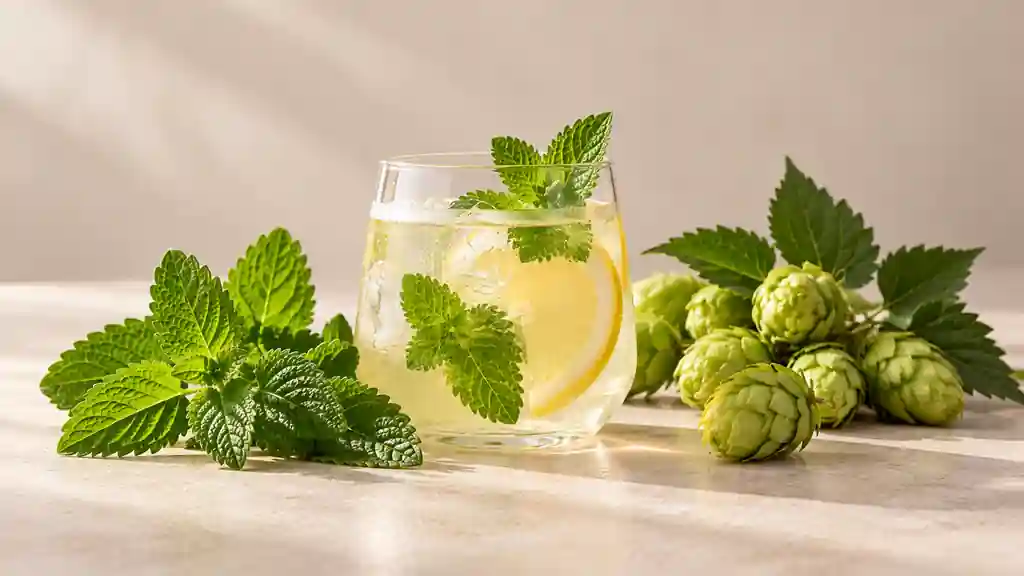
Lemon balm is generally the easier choice for a light, citrus-forward evening drink. Hops are better suited to people who deliberately want bitter, resinous, or beer-inspired botanical flavors. Neither plant is universally better, and the finished extract matters as much as the herb itself.
Here is how their typical sensory characteristics compare.
Characteristic | Lemon Balm Tincture | Hops Tincture |
|---|---|---|
Botanical name | Melissa officinalis | Humulus lupulus |
Plant family | Lamiaceae (mint family) | Cannabaceae (hemp family) |
Commonly used plant part | Leaves and other above-ground parts | Female flower cones |
Typical aroma | Lemony, green, gently herbal | Herbal, floral, earthy, sometimes citrusy or pine-like |
Typical taste | Mildly grassy, citrus-herbal | Resinous, herbal, potentially strongly bitter |
Bitterness | Usually relatively mild | Highly dependent on hop variety and extraction |
Suggested flavor pairing | Lemon, lime, berries, sparkling water | Grapefruit, citrus peel, ginger, tonic-style mixers |
Best flavor direction | Fresh botanical spritz | Bitter botanical aperitif-style drink |
These descriptions represent common botanical profiles, not a standardized taste test of commercial tinctures. A sweetened glycerin extract may taste noticeably different from an ethanol-based extract of the same plant.
Why Do Lemon Balm and Hops Taste So Different?
The difference begins with the plants themselves. Lemon balm is valued for its aromatic foliage, while hops contain distinctive resins and essential oils concentrated in their flower cones.
Lemon Balm: A Mediterranean Herb With a Lemony Aroma
Melissa officinalis is a perennial member of the mint family, native to the Mediterranean region and extending into Central Asia. Its soft green leaves release a recognizable lemon scent when crushed.
The aroma comes partly from naturally occurring volatile compounds, including citral and citronellal. Unlike lemon juice, lemon balm does not have a strongly acidic citrus flavor.
In drinks, it generally contributes green, gently citrus-like, and mildly herbal characteristics. These notes pair naturally with sparkling water, citrus juice, and lightly sweetened beverages.
However, the finished tincture may not smell as bright as fresh leaves. Drying, storage, and extraction conditions influence the final aromatic profile.
Hops: A Climbing Plant With Resinous Flower Cones
Humulus lupulus is a climbing perennial in the Cannabaceae family. Its native distribution includes much of Europe and parts of western and central Asia, with populations also recorded in North Africa.
The familiar green hop cones are female flower structures containing glands that produce aromatic oils and resins.
Hop varieties can smell floral, woody, spicy, herbal, pine-like, tropical, or citrusy. Their bitter character comes from several groups of compounds, including hop acids and their derivatives.
Hops are widely associated with beer, but not every hops extract tastes like an India pale ale. Different varieties and processing methods emphasize different aspects of the plant.
Why Beer Bitterness Does Not Predict Every Hops Tincture
Beer brewing changes hop chemistry. During boiling, hop alpha acids can convert into iso-alpha acids, which contribute substantially to beer's characteristic bitterness.
A liquid extract prepared without the same brewing conditions may have a different composition. It can still taste bitter, but its bitterness cannot be predicted from beer descriptions alone.
Hop variety, storage conditions, extraction solvent, and preparation method all affect the result.
What Does Sensory Research Say About Hops in Herbal Drinks?
Published sensory research supports the idea that hops can introduce challenging bitterness into nonalcoholic herbal beverages. However, these studies should not be mistaken for direct comparisons of commercial lemon balm and hops tinctures.
One study evaluating herbal beverage formulations found that a hops-containing preparation received unfavorable taste ratings because of its characteristic bitterness. A separate formulation containing lemon balm received a more favorable sensory response.
The beverages contained additional ingredients, so the findings do not establish that every lemon balm extract tastes better than every hops extract.
Research on hop-containing beverages also shows that aroma and bitterness interact. A strongly resinous or herbal aroma can influence how intense the bitterness feels.
For a beginner choosing a zero-proof drink ingredient, the practical distinction remains useful: lemon balm usually offers a softer starting point, while hops can create a more assertive flavor.
Can a Herbal Tincture Really Be Alcohol-Free?
Yes, some liquid herbal extracts are made without ethanol, but not every product sold as a tincture is alcohol-free. The extraction liquid must be checked before the product is used in a strictly zero-proof beverage.
Traditional Alcohol-Based Tinctures
Traditional herbal tinctures commonly use a mixture of ethanol and water to extract plant constituents.
Adding a small amount of this tincture to sparkling water does not eliminate its alcohol content. Dilution reduces the concentration in the finished beverage, but it does not make an ethanol-containing ingredient alcohol-free.
This distinction matters for people who avoid alcohol entirely for personal, religious, dietary, or other reasons.
Alcohol-Free Glycerin Extracts
Some manufacturers use vegetable glycerin and water to produce liquid herbal extracts. These preparations are commonly called glycerites, although the terms "glycerite" and "alcohol-free tincture" may overlap in retail descriptions.
Vegetable glycerin has a naturally sweet flavor and a thicker mouthfeel than water. It can make a botanical extract seem less sharp.
Nevertheless, sweetness does not guarantee that hops bitterness will disappear, and glycerin-based preparations are not necessarily chemically equivalent to ethanol extracts.
What Zero-Proof Means for Your Ingredients
A practical zero-proof drink starts with ingredients that do not introduce beverage alcohol. Check the labels of herbal extracts, bitters, flavorings, and mixers.
The term "zero-proof" does not have one universal labeling definition across all markets. If complete ethanol avoidance is essential, verify the product's ingredients and the manufacturer's alcohol-content information rather than relying on the drink's name.
Which Extract Works Best in an Evening Mocktail?
Both herbs can fit into evening drink ideas, but their strongest flavor pairings differ. Lemon balm suits refreshing, lightly aromatic combinations. Hops work better when a recipe has enough citrus, sweetness, or other flavor to balance potential bitterness.
Lemon Balm With Sparkling Citrus Water
Lemon balm's fresh aroma makes it a natural match for sparkling water with lemon or lime.
For a citrus-forward drink, an alcohol-free lemon balm tincture for a citrus-forward nightcap is one option to consider when its label permits mixing the suggested serving with water.
Use chilled sparkling water as the base, add fresh citrus, and incorporate the extract according to its directions. A little fruit sweetness can balance grassy notes without overpowering the herb.
Hops With Grapefruit and Ginger
Hops pair well conceptually with bitter citrus and spicy flavors. Grapefruit and ginger can create a more assertive drink with a profile reminiscent of a botanical aperitif.
Choose an alcohol-free extract suitable for oral use and follow its serving instructions. Do not assume that a concentrated brewing hop extract or essential oil is suitable for direct use in a beverage.
Lemon Balm and Hops Together
The two botanical flavors can also complement each other. Lemon balm contributes brighter herbal notes, while hops may add earthy depth and a bitter finish.
However, combining dietary supplements requires more consideration than combining ordinary culinary ingredients. Follow each product's instructions and check suitability before mixing multiple extracts.
Which Flavor Profile Matches Your Drink Preferences?
Your preferred drink style offers a more useful decision rule than choosing an herb simply because it is traditionally associated with the evening.
Drink Preference | Better Starting Point | Reason |
|---|---|---|
Light citrus spritz | Lemon balm | Fresh lemony herbal character |
Mildly flavored sparkling water | Lemon balm | Generally less assertive bitterness |
Bitter aperitif-style drink | Hops | Potential for resinous and bitter complexity |
Beer-inspired botanical flavor | Hops | Characteristic hop aromas |
Fruit-forward herbal mocktail | Lemon balm | Works naturally alongside citrus and berry flavors |
Strong herbal flavor with a lingering finish | Hops | More pronounced botanical character in many preparations |
If you dislike bitter beverages, lemon balm is generally the safer sensory choice. If you enjoy grapefruit peel, tonic-style bitterness, or hop-forward beverages, hops may provide a more interesting starting point.
What Should You Know Before Using Herbal Drops in Drinks?
Liquid herbal supplements are not automatically interchangeable with ordinary beverage flavorings. Their concentration, ingredients, and intended serving sizes can differ considerably.
Secrets Of The Tribe takes the editorial position that accurate alcohol-free labeling and clear usage instructions matter more than creating a fashionable botanical nightcap.
Check the full ingredient list, botanical name, serving size, and product directions. Some herbal preparations are intended to be taken with water, while others are designed for specific applications.
Do not use undiluted essential oils or brewing concentrates as substitutes for oral herbal supplements unless the manufacturer specifically identifies them as appropriate for that use.
Also remember that a drink's pleasant flavor does not establish the suitability of a supplement for every person. If you take medication, are pregnant or nursing, or have relevant health concerns, consult a qualified healthcare professional before using herbal supplements.
Keep servings within the product's directions. A larger glass or stronger mixer does not justify increasing the amount of extract.
Checklist: Choosing an Alcohol-Free Herbal Extract for Evening Drinks
Use this checklist before selecting a botanical extract for your next zero-proof drink. It covers the practical details that influence flavor, ingredient suitability, and everyday preparation.
1. Confirm the Plant Species
Look for the complete scientific name on the label. Common names alone may not identify the exact botanical ingredient.
2. Verify the Alcohol-Free Base
Read the full ingredient list and check whether ethanol appears. If strict alcohol avoidance matters, request clarification when the label is ambiguous.
3. Identify Your Taste Preference
Decide whether you prefer gentle citrus-herbal notes or stronger bitterness. This will help narrow the choice.
4. Check the Intended Use
Confirm that the product is intended for oral use and that its directions allow mixing with your chosen beverage.
5. Choose a Suitable Mixer
Use sparkling water or another alcohol-free beverage with a complementary flavor. Consider acidity and sweetness when balancing bitter herbal notes.
6. Follow the Serving Instructions
Use the amount specified on the product label. Do not increase the serving to make the herbal flavor more noticeable.
7. Review Personal Suitability
Consider other supplements, medications, and relevant health circumstances before use. Ask a qualified professional when suitability is uncertain.
FAQ
1. Is lemon balm tincture less bitter than hops tincture?
Generally, lemon balm has a milder flavor than hops. However, hops bitterness depends on the variety, extraction method, and finished formulation.
2. Can hops tincture be used in a zero-proof cocktail?
Yes, if the extract is genuinely alcohol-free, intended for oral use, and suitable for the planned preparation. Check its ingredients and serving directions.
3. Does lemon balm tincture taste like lemon?
Lemon balm usually has lemon-like aromatic notes, but it does not taste exactly like lemon juice. Its flavor is more herbal and less acidic.
4. Does hops tincture taste like beer?
Not necessarily. Hops contribute characteristic aromas to beer, but brewing changes hop compounds. A liquid extract can taste different from a finished beer.
5. Are alcohol-free tinctures always made with glycerin?
No. Manufacturers may use glycerin, water, or other suitable extraction systems. Always check the specific ingredients.
6. Can adding water remove the bitterness of hops?
Water reduces the concentration of bitter compounds in each sip but does not remove them. The resulting drink may still taste distinctly bitter.
7. Is a cocktail made with alcohol tincture considered zero-proof?
Not strictly. An ethanol-containing tincture introduces alcohol into the beverage, even if the amount is small.
8. Can lemon balm and hops extracts be combined?
Their flavors can complement one another, but combining herbal supplements requires checking ingredient compatibility, product directions, and individual suitability.
Glossary
Lemon Balm (Melissa officinalis)
An aromatic herb from the mint family with naturally lemon-scented leaves.
Hops (Humulus lupulus)
A climbing perennial plant whose female flower cones contain aromatic oils and bitter resins.
Zero-Proof Drink
A beverage intended to contain no alcoholic ingredients, although labeling conventions can vary by market.
Tincture
A liquid botanical preparation traditionally made using alcohol and water as extraction solvents.
Glycerite
A botanical liquid extract made using glycerin, commonly combined with water.
Alpha Acids
Natural compounds found in hop resins that can convert into important bitter compounds during brewing.
Iso-Alpha Acids
Bitter compounds formed from hop alpha acids under suitable processing conditions, especially during wort boiling.
Volatile Compounds
Aromatic substances that evaporate relatively easily and contribute to the recognizable scent of plants.
Sensory Profile
The combined taste, aroma, mouthfeel, and other characteristics perceived when consuming a product.
Conclusion
Lemon balm is generally the better starting point for a light, citrus-herbal zero-proof nightcap, while hops suit drinkers who enjoy more assertive botanical aromas and potential bitterness. Whichever flavor you prefer, confirm that the extract is alcohol-free and follow its intended-use instructions before adding it to an evening drink.
Sources Used
- Botanical classification and native distribution of Melissa officinalis - powo.science.kew.org / Melissa officinalis L.
- Botanical classification and native distribution of Humulus lupulus - powo.science.kew.org / Humulus lupulus L.
- Lemon balm leaf characteristics, fragrance, and traditional culinary applications - hort.extension.wisc.edu / Lemon Balm, Melissa officinalis
- Hop resins, essential oils, bitterness, and the effects of processing on sensory characteristics - pmc.ncbi.nlm.nih.gov / Effects of Dry-Hopping on Beer Chemistry and Sensory Properties: A Review
- Sensory evaluation of herbal beverages containing lemon balm or hops - pmc.ncbi.nlm.nih.gov / Modulating the Bioavailability and Bioaccessibility of Polyphenolic Compounds and Enhancing Health-Promoting Properties Through the Addition of Herbal Extracts to a Functional Beverage
- Research on hop bitter acids and their roles in flavor - pubmed.ncbi.nlm.nih.gov / Hop Bitter Acids: Resources, Biosynthesis, and Applications
- Research on hop variety, aroma, and perceived bitterness - pubmed.ncbi.nlm.nih.gov / Perceived Bitterness Character of Beer in Relation to Hop Variety and the Impact of Hop Aroma
- Guidance on dietary supplement labeling, ingredients, and consumer considerations - fda.gov / FDA 101: Dietary Supplements
- Alcohol-free lemon balm tincture product details and suggested use - secrets.shop / products/lemon-balm-tincture
No hay comentarios:
Publicar un comentario